


Pelvic pain: What is it and how do you relieve the discomfort?
7 Oct. 2025
Verified by

Scan the QR code with your phone’s camera to download the app

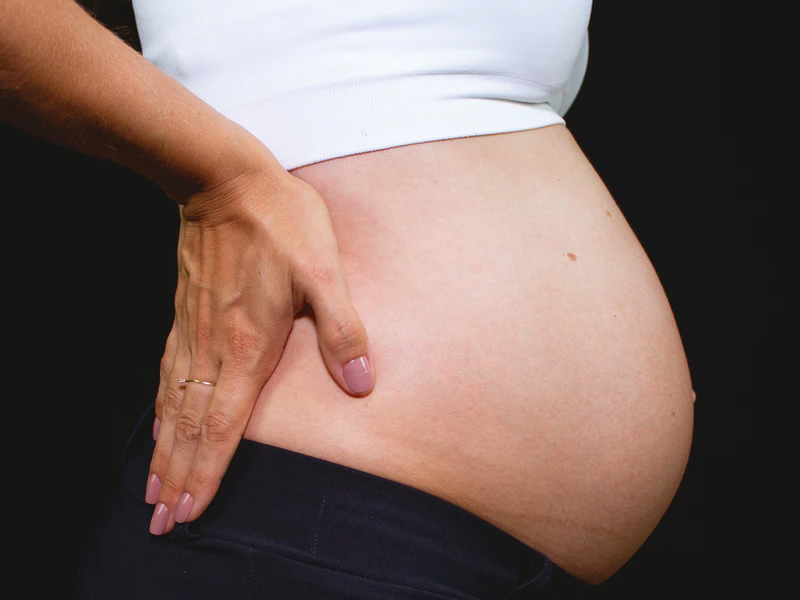
Pelvic pain, or symphysis pubis dysfunction in medical language, is common during pregnancy and is harmless both for the pregnant person and the foetus. A doctor or physiotherapist can give you a diagnosis of pelvic pain if you seek medical attention for your pain – previously pelvic pain was called pelvic girdle pain which is still more the general word to describe the pain. The pelvis has joints that hold the bones of the pelvis together. Most people usually get pain in a joint found at the symphysis, which is in the middle of the pubic bone, and in two areas at the back of the lower back (the SI joints).
The hormone relaxin is secreted throughout pregnancy and is formed in the ovaries and placenta. Relaxin softens the joints and makes the joints in the pelvis more mobile to allow the baby to pass through during birth. It’s a clever trick of the body (!), but pelvic instability can be incredibly painful. Sometimes pelvic pain limit your daily activities. Pelvic pain can be difficult to completely relieve, but you can help train the muscles around the joints to stabilise your pelvis. You may benefit from the help of a physiotherapist, preferably someone with in-depth knowledge of women’s health. Some physiotherapists can also give you acupuncture for pain relief.
All pregnant women can experience pelvic pain, but the risk increases if you have previously had back pain, injured your pelvis or done lots of heavy lifting. How much pelvic pain you may experience depends largely on how active you are during the day. You often get more pain in the evening if you have moved a lot during the day.
Tips to counteract pelvic pain:
• Do not sit with your legs crossed
• Take short steps
• Walk at a slow pace
• Exercise muscles around the joints in the pelvis
• Try to keep your lower back straight (i.e. don’t slouch)
• Wear comfortable shoes
• If you sleep on your side, put a pillow between your knees so your pelvis is not compressed
Tips for relieving pelvic pain:
• Maternity belt (can be purchased from a physiotherapist)
• Take a warm shower
• Massage
• Use a TENS machine
• Acupuncture
• Heating pad
Pelvic pain usually goes away after childbirth, but not for everyone. If it doesn’t go away for you, you can seek treatment from a physiotherapist.


