


Children and screens, how good are they?
8 Oct. 2025
Scan the QR code with your phone’s camera to download the app

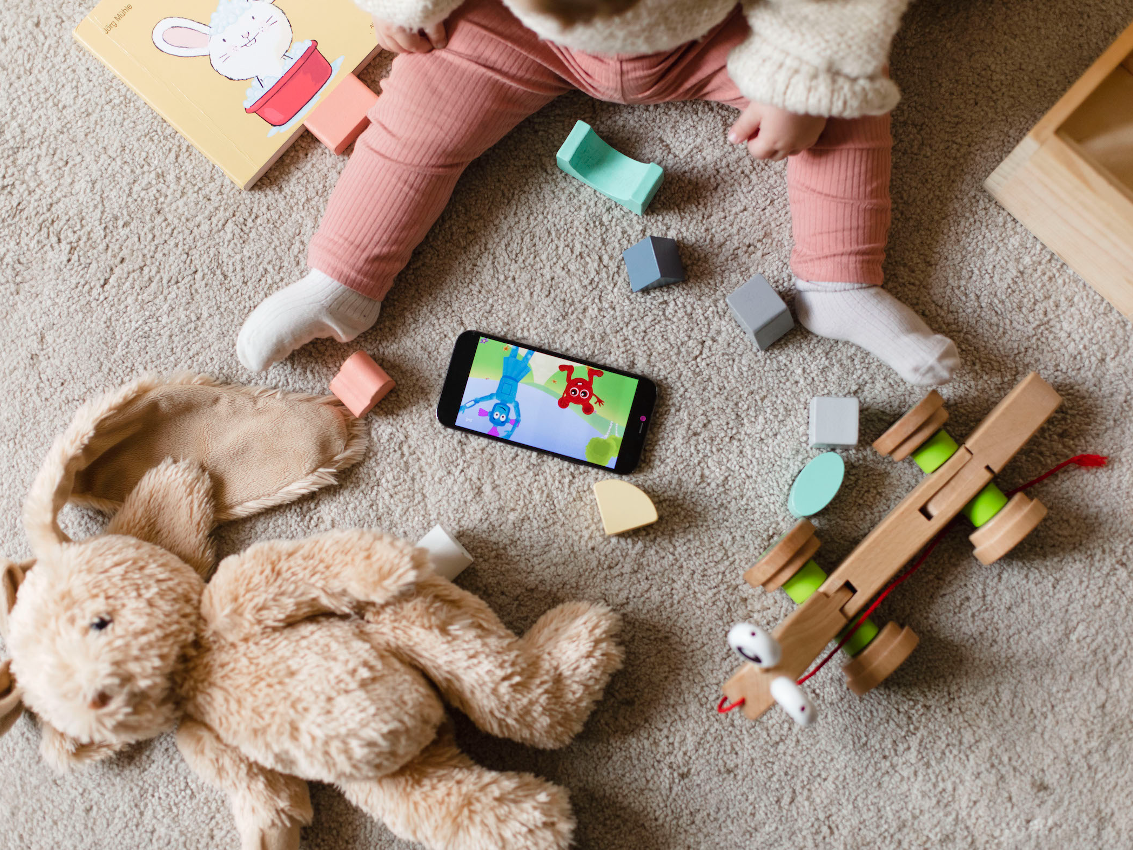
Screens of various kinds are today a large part of people’s everyday lives, for both adults and children. By screen we mean a TV, computer screen, tablets and smartphones. Since children develop in interaction with others, it is through the secure relationship with their parents that children can explore and learn to understand their surroundings more and more, so it may be a good idea to limit screen time. The latest research shows that too much screen time for children under the age of three can be harmful to the child’s development.
Sitting with your child and reading a book by pointing and talking about what you can see in the pictures is developmental and strengthens the bond between you and your child. Research shows that what happens on a screen is not perceived in the same way by children under the age of three as by an adult, as the image information from the screen cannot be transferred to reality. Learning takes place in physical and three-dimensional reality. Interaction through play and movement is also important for your child’s language and motor development, therefore screen time needs to be limited so that it does not take away from the interactions that are most developmental for your child.
Content with loud sounds, colours and fast moving objects can be difficult for young children to sort out and can easily overstimulate your child. Children can also find things that happen on TV or another screen to be scary and unpleasant, so it is good for you as a parent to sit with your child so that they have someone to turn to if they find the content scary. What you as a parent need to keep in mind is that what children watch and the fact that you are doing it together is the important thing.
Digital tools are used today both at home and in nurseries. So, what should you do with children over three years old? It is good that your child gets to know digital tools early but with the help and support of adults. As a parent, you need to be aware of what is available to children and make them safe on the internet. Today, there are many blockers that can be activated so that inappropriate online content is not visible to your child, check with your internet service provider to find out what is available. It is not the length of screen time but the content that is most important. Be interested and guide your child in what they can watch and keep track of the apps you download and what they contain. Are there in-app purchases? Many parents have despaired in discovering that their child has “bought” something and it has become an expensive affair for the family.
Having rules and structure around watching TV and other screen time is good to get settled beforehand so that you avoid conflicts. If conflicts take over, it may be an idea to simply take a break from screen time altogether. Your child should preferably sit at a distance of 40 cm from the screen, as it is not good for their eye development to sit too close. It is also good to take breaks, both for their eyes and to avoid sitting still for too long.
Alternate between screen time and other activities, outside and inside. Experiencing things and events should be joyful and fun! Create a balance between different activities and screen time in everyday life. If you have more questions and concerns about screens and screen time, you can contact a children’s health centre or call your health care services. Remember that your screen time affects your child and that children want to do what their parents do!


