


Infants’ need to move
9 Oct. 2025
Scan the QR code with your phone’s camera to download the app

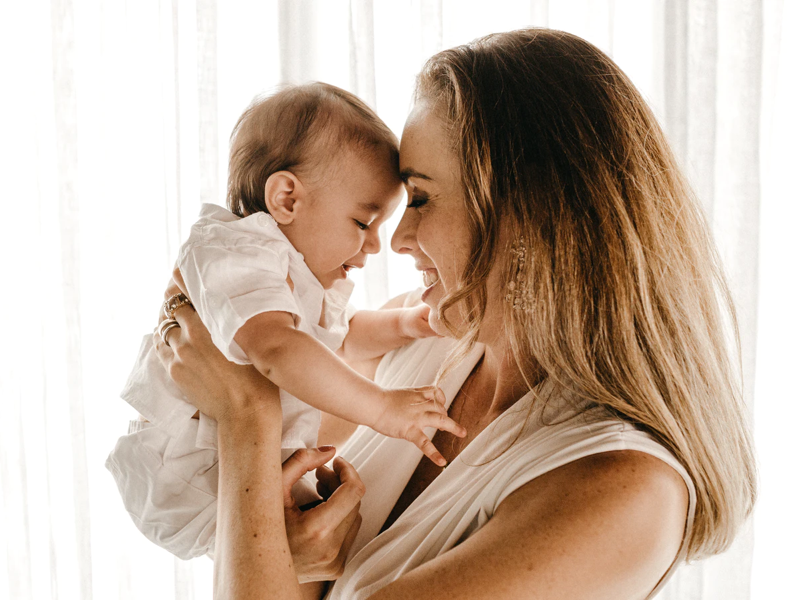
All children develop at different rates. Some children skip a step, such as crawling, even though their development follows a certain predetermined plan.
At first your child learns to control their head and neck, then their arms and upper body and finally their legs. They need to be able to balance their head before it is possible to learn to sit or stand. Your child does not need any special motor skills training, such as teaching them to crawl, instead their motor development follows a certain pattern.
Playing is important for all children, young and old! Play can be compared to an adult’s everyday exercise, and it is important for your child to get to use their abilities. Being on the floor together with a parent provides good stimulation, ideally when on their stomach.
For an infant, it is important to lie on their stomach while awake, starting with short periods if they are tired. Being on their tummy stimulates their motor development, trains their balance and muscles and improves head control. Start getting your baby used to lying on their stomach as soon as possible by having them lie for a little while every time they are awake. In this way, being on their tummy becomes something natural for your child. It is usually easier for your child to lie on a slightly firmer surface, such as a thin mattress on the floor, and sometimes it helps if your child has a rolled-up towel under their chest. Holding your hand over your baby’s bottom also provides good support. Lying on your stomach is the first step to learning to turn around, lean forward and crawl.
Learning new movements is often difficult and it takes a lot of practice before your child can do a movement without having to think.
Small children do not need organised activity, just looking at their parent’s face is very exciting! Their parent can lie on their stomach opposite their baby, keep eye contact and talk to them. Lying on their stomach also prevents one-sided strain on the back of their child’s head, something that can affect the shape of their skull as an infant’s skull bone is soft and malleable. If your child lies in the same position against a firm surface, the shape of their skull is at risk of becoming crooked. If your child always lies still on their back, the shape of their skull is at risk of becoming flat at the back. Vary the head position when your child is on their back so that their head turns alternately to the right and to the left. Having your child in a car seat (when you are not driving) and having your child sit in a carrier for longer periods means they are in a passive sitting position and this can affect the shape of your child’s skull. The joy of movement comes naturally to children and it is the role of the adult to create the conditions for this!


